

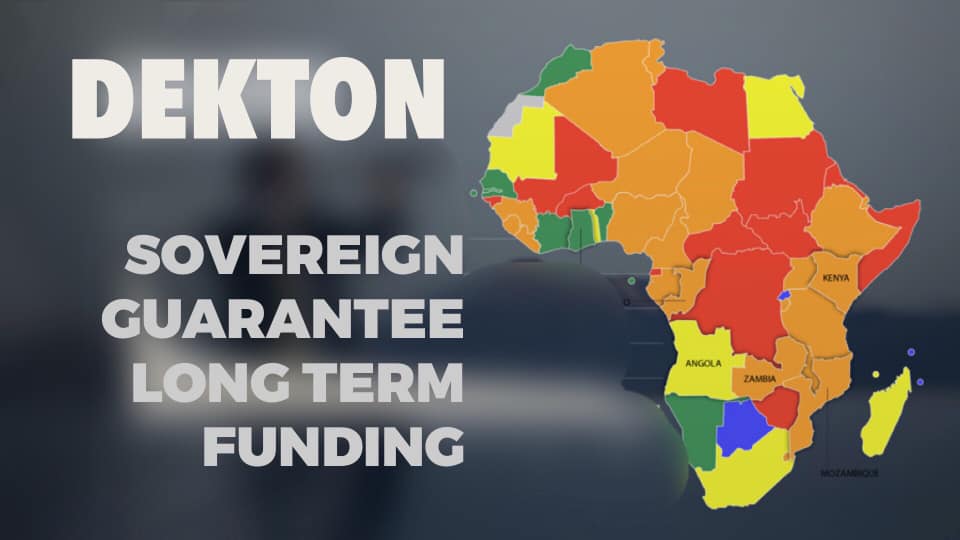

our concept ıs provıdıng countrıes wıth thıer need for ınfrastrucutre projects agaınst fınancıal secuırtıes
DEKTON works as EPCF contractor and has access to funds in London, Europe and Far East
- Dam & HPP.
- Roads, Bridges & Tunnels.
- Oil & Gas infrastructures.
- Solar & Wind turbines.
- Design and Manufacture of Oil, Gas and Petrochemical Plants (EPCF)
- Project Management.
- Procurement Management.
- Construction Management.
- Commissioning & Pre-Commissioning of Chemical Plants.
- Feasibility and Techno-Economic Studies.
- Undersea & Overhead pipelines.


CENTRAL BANKS-MONEY CREATION
Money creation, or money issuance, is the process by which the money supply of a country or economic region is increased. In most modern economies, both central banks and commercial banks create money. Central banks issue money as a liability, typically called reserve deposits, which is available only for use by central bank account holders. These account holders are generally large commercial banks and foreign central banks.
Central banks can increase the quantity of reserve deposits directly by making loans to account holders, purchasing assets from account holders, or by recording an asset (such as a deferred asset) and directly increasing liabilities. However, the majority of the money supply that the public uses for conducting transactions is created by the commercial banking system in the form of commercial bank deposits. Bank loans issued by commercial banks expand the quantity of bank deposits.
Money creation occurs when the amount of loans issued by banks increases relative to the repayment and default of existing loans. Governmental authorities, including central banks and other bank regulators, can use various policies—mainly setting short-term interest rates—to influence the amount of bank deposits that commercial banks create.
Money supply
The term “money supply” commonly denotes the total, safe, financial assets that households and businesses can use to make payments or to hold as short-term investments. The money supply is measured using so-called “monetary aggregates,” which are defined based on their respective levels of liquidity.
In the United States, for example:
- M0: The total of all physical currency, including coinage. Using the United States dollar as an example, M0 = Federal Reserve notes + US notes + coins. It is not relevant whether the currency is held inside or outside of the private banking system as reserves.
- M1: The total amount of M0 (cash/coin) outside of the private banking system plus the amount of demand deposits, travelers’ checks and other checkable deposits.
- M2: M1 + most savings accounts, money market accounts, retail money market mutual funds, and small denomination time deposits (certificates of deposit under $100,000).
In most countries, the central bank, treasury, or other designated state authority is empowered to mint new physical currency, usually taking the form of metal coinage or paper banknotes. While the value of major currencies was once backed by the gold standard, the end of the Bretton Woods system in 1971 led to all major currencies becoming fiat money—backed by a mutual agreement of value rather than a commodity.
Various measures are taken to prevent counterfeiting, including the use of serial numbers on banknotes and the minting of coinage using an alloy at or above its face value. Currency may be demonetized for a variety of reasons, including loss of value over time due to inflation, redenomination of its face value due to hyperinflation, or its replacement as legal tender by another currency. The currency-issuing government agency typically works with commercial banks to distribute freshly minted currency and retrieve worn currency for destruction, enabling the reuse of serial numbers on new banknotes.
In modern economies, physical currency consists of only a fraction of the broad money supply. In the United Kingdom, gross bank deposits outweigh the physical currency issued by the central bank by a factor of more than 30 to 1. The United States, with a currency used substantially in legal and illicit international transactions, has a lower ratio of 8 to 1.
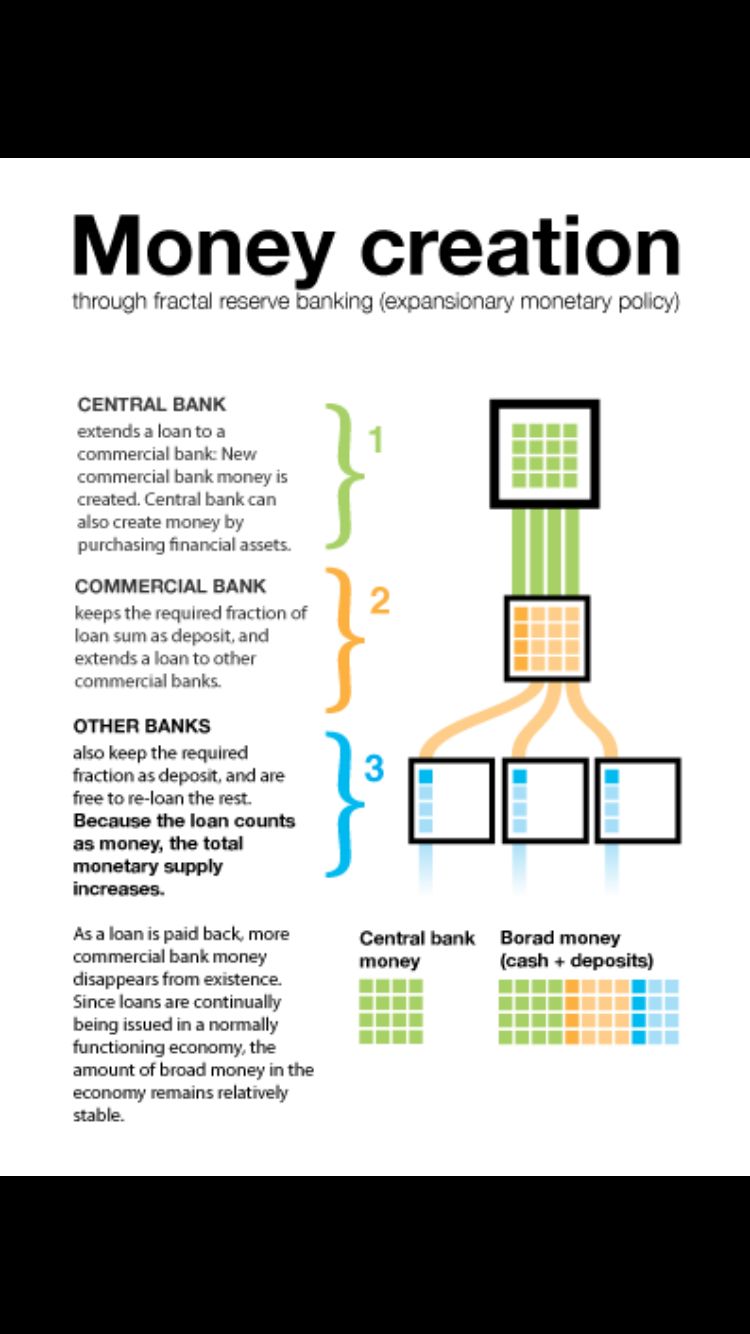
How money is created by the central bank and the banking

Roles and objectives of modern central banks

Tokenisation and the Future of Finance-Role of Central Bank Money